CHINS: POINTLESS EVOLUTION OR SEXY SPANDREL?
 BLOGTHIS! HENRY Cavill. Jay Leno. The late Kirk Douglas. American Dad.
Humans are the only primates with a chin. Dimples, optional extras. No other human species developed a chin, not even Neanderthals, leaving scientists to wonder why we have one when it serves no purpose, single or double. Some suggest it is a sexual ‘protrusion’ to attract other humans.
But a new study published in the Journal of Human Evolution suggests chins are a result of evolutionary or genetic ‘drift’.
An unintended byproduct of natural selection.
The chin is the forward pointed part of the anterior mandible below the lower lip with a fully developed human skull size of 0.7cm to 1.1cm. Most components of the human body have been driven by natural selection, but the chin is not one of them.
“The chin is likely a byproduct, not an adaptation.”
University of Buffalo study author and anthropologist Noreen von Cramon-Taubadel states: “Evolution is often messier and less directed than people expect or assume.”
Researchers found the chin didn’t evolve for a specific reason but as a side effect of other changes driven by natural selection. Studies suggest chins evolved as a way to resist biomechanical stresses related to mastication, or chewing.
The chin is regarded as a spandrel, a term used to describe a feature in an organism that is unintentionally produced by other adaptations.
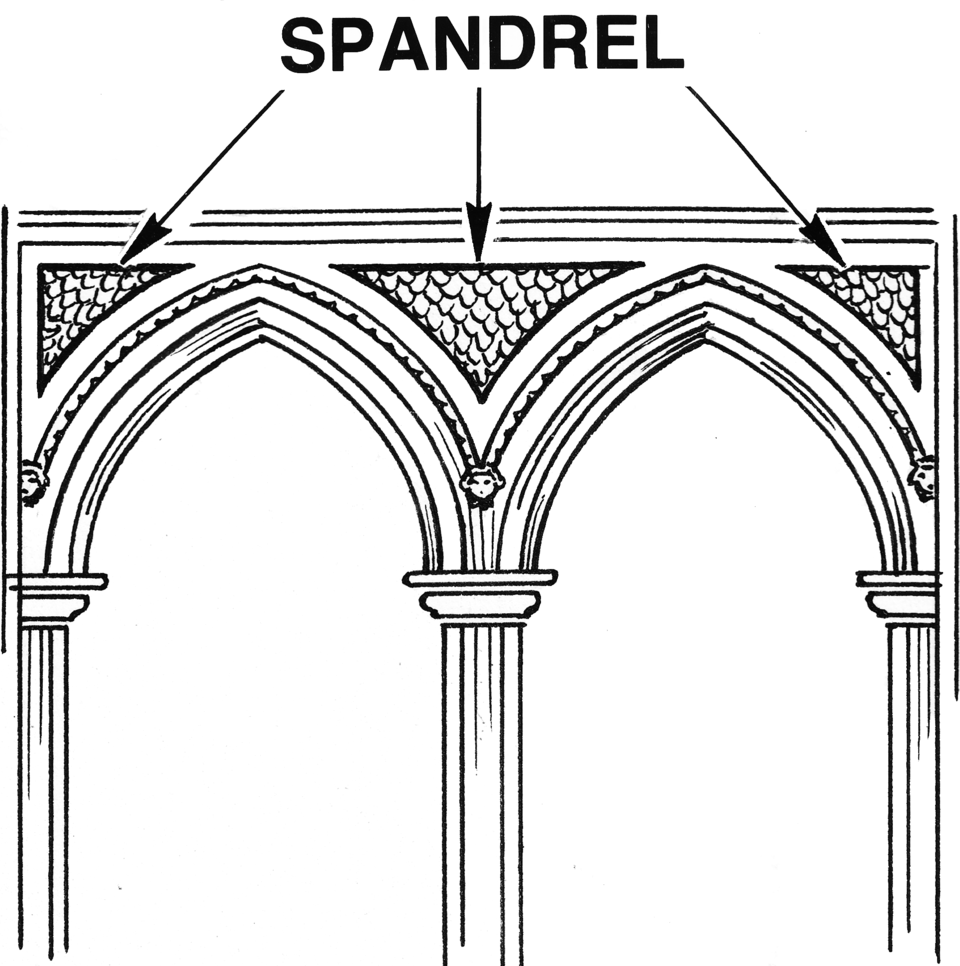 The term was popularised by American evolutionary biologist Stephen Jay Gould and geneticist Richard Lewontin who noticed that the triangular spaces (or spandrels) between the top curve of an arch served no architectural purpose. Instead, they are byproducts of the arch itself. Instead of empty building space, countless species exhibit physical spandrels thanks to the summation of other useful anatomical features.
“When it comes to humans, the clearest example of a spandrel is our chins.”
Professor von Cramon-Taubadel said other biological spandrels included the human belly button, the shoulder hump of the extinct giant Irish deer and the male-mimicking genitalia of female hyenas.
Anthropologist James Pampush started probing the evolution of the chin as far back as 2015 when he said: “My guess is that it happened around two million years ago when there was a jump in brain size. We had a soft diet, and we no longer needed big teeth. Around two million years ago there were a lot of changes to the ‘human-like’ animals. Homo erectus had a larger body size, much larger brains, was probably cooking and there’s a good chance they were using clothing.
“They are very human-like, but had no chins. I’m guessing the changes which ultimately lead to the chin are directly related to cooking, and indirectly related to larger brains and bodies.
“Cooking enabled Homo erectus to spend much less time feeding … this allowed for smaller teeth and the reduction in tooth size may have produced the chin as a spandrel.’’
Additional evolutionary posts at www.streetwisemedia.com.au.