BUSINESS OR PLEASURE? AUSTRALIA’S PASSPORT JOURNEY
‘Live your life by a Compass and not a Clock’
 By Carmelo Amalfi
DOCUMENTS whether in paper, timber or stone have allowed people to travel beyond their birthplace since the written word. Such documents were used in ancient times to endorse individuals’ safe travel.
In the Old Testament, Nehemiah travelled from Shushan in Persia (Iran) to Susiana to Jerusalem in 450BC: “And I said to the King, if it pleases the King, let letters be given me to the governors of the province beyond the river, that they may let me pass through until I come to Judah.” Try travelling from Iran to Israel today.
In his 2008 history, ‘Every Assistance and Protection: A History of the Australian Passport’, US author educator Stephen Covey says a passport can never provide a guarantee that the bearer will reach his destination ‘without hindrance’, an outcome that always remains contingent on the goodwill of other nations.
In feudal societies, there was no travel for leisure. Moving place to place often was a matter of life and death.
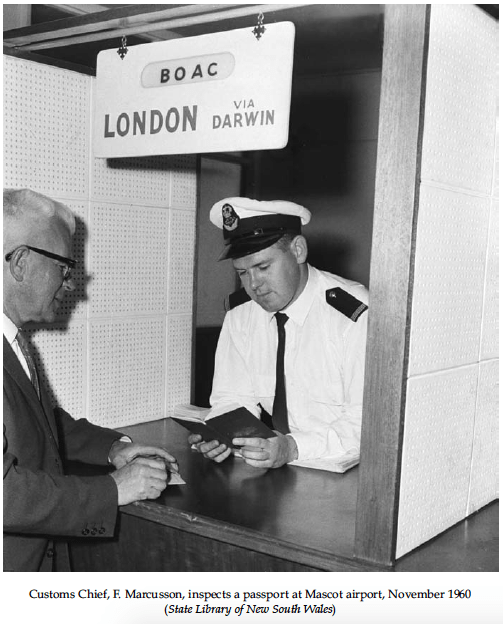
Covey says bearing a passport rendered Australian travellers as, “quasi-diplomatic representatives of their country abroad”. Australian governments retain the ultimate right not to issue or to cancel travel documents.
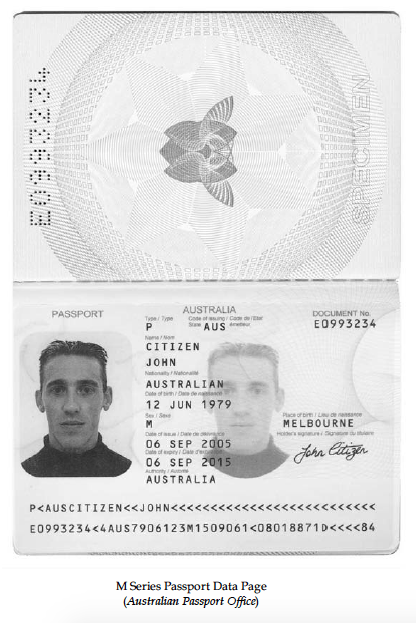
He says historically the degree to which Australians have been interested in matters of foreign policy is questionable: “Many have lived their entire lives with little concern or interest in the diplomacy of Australian governments. But over the course of the 20th century and into the 21st, Australians have come to be inveterate travellers.” From 1994 to 2004, the number of Aussies travelling abroad increased by 84 per cent.
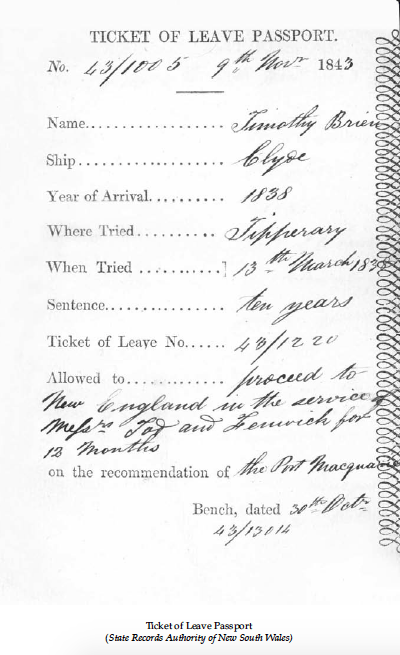 Covey’s book charts the development of the Australian passport since colonial times when ‘passports’ were issued to ticket-of-leave convicts. From the first passport with those terrible pharmacy shots to biometric technology used to deter identity theft.
“There is no definite record when passports came to be granted, but documents permitting the individual to travel from one territory to another seem to have existed in one form or another since the advent of the written word and civilised societies,” he writes.
It was in the mid-15C that the word ‘passport’ began to appear in English statutes: ‘No captain shall give to any of his soldiers appointed to serve under him in any town or fortress kept with garrisons of soldiers any licence or passport to depart from his service’.
It was not until the 16C that the form and content of safe conducts and documents such as the ‘King’s Licence’ were standardised in Europe.
On 11 July 1670, England and Denmark concluded a treaty providing for mutual trade requiring ‘letters of passport’ to accompany ‘ships, goods and men of the contracting states when visiting the territories of each state’. These are regarded as the modern precursor to the ‘passport’ as they appear to be official documents ‘issued by a state to its own subjects to enable them to travel abroad’.
“In other words, the passport was proof of nationality,” Covey says.
Passport please
 Convicts of the First Fleet did not carry passports nor did officers and crew. Their safety was invested in Captain Arthur Phillip’s sea brief, which established his bona fides as NSW Governor and his ships’ nationality as British. Passports were exceedingly rare documents but in time a form of colonial passport was introduced and issued to ticket of leave convicts, explorers and protected Aboriginals.
Once free settlers began arriving in the colonies, “Britain had abolished the passport for travel within the Empire (1826), paving the way for successive waves of immigrants between the 1840s and 1860s that permanently altered the colonies’ social, economic and political landscape”.
The holder of the first Australian Commonwealth-issued passport appears to have been Melbourne businessman John Edward Briscoe. In April 1901, Briscoe applied for passports for himself and his sister Helen so they could travel to Europe via the trans-Siberian Railway.
A single passport system was not introduced until September 3, 1912, when the Commonwealth Gazette announced Australia’s first passport regulations for Commonwealth-issued passports, “to be granted ‘only to natural born British subjects or to persons naturalised in the Commonwealth of Australia’”.
Covey says one of WWI’s most visible legacies is the passport, “which represents an enduring aspect of the war’s transformation of societies such as Australia. WWI gave rise to the modern nation state … documents such as passports helped determine who was ‘in’ and who was ‘out’”.
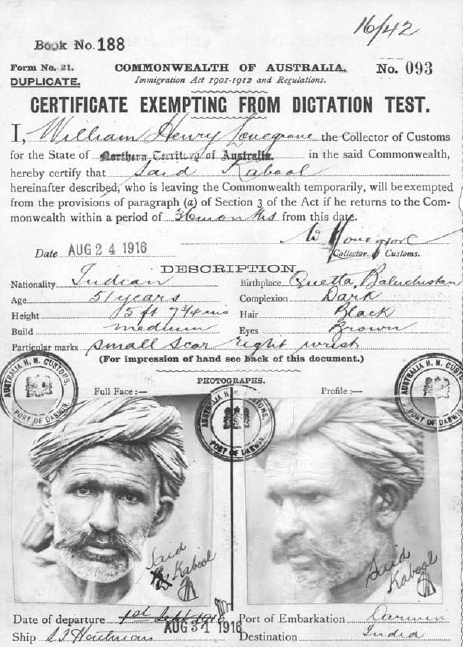 The Passports Act 1920 was an emasculated version of its wartime predecessor and there were concerns a number of restrictions had been lifted, he says. In the postwar period, reasons for refusing a passport application became wide-ranging. By the mid-1930s, they included a single girl wanting to accompany man on trip abroad; insufficient funds and possibility of becoming stranded abroad; persons wishing to go to USA to join certain religious organisations; single girl desiring to proceed abroad for the purpose of being married against parents wishes; persons wishing to proceed abroad without consent of husband or wife; persons wanted by police or concerned in legal proceedings; and persons of weak mentality.
Covey said after Australia passed its citizenship legislation in 1948, the passport became a document that identified its bearers as citizens.
The late 1960s to the late 1980s saw globalisation increase the movement of peoples across state boundaries. As improvements in civil aviation made travel by Australians cheaper and easier, the demand for passports increased dramatically.
After 11 September 2001, consensus emerged internationally that all countries should develop technologies for validating a person’s identity by reference to unique biometric characteristics, the ePassport.
“Theoretically, if a person could be uniquely identified as a citizen of the world, rather than of a nation-state, we might reach a point where there is no need for Australians to continue to carry a passport.”
This would require a single standard biometric attribute on which identification would be based that would be known to every authority that required proof of identity. One way of doing so would be to place every person’s biometric data or genetic code on a universal database. But there are logistic, technological and cultural barriers.
 “For the foreseeable future, Australian citizens will need to carry a passport that transports unique information that can be verified by each other country’s database.”
Approximately 13,600,000 people do not hold a valid passport for various reasons; cost, lack of interest, particularly among families on low incomes, and preference to holiday at home.
More than 2.3 million or 9000 passports each business day were issued in 2025. More than 30,000 passports were lost or stolen.
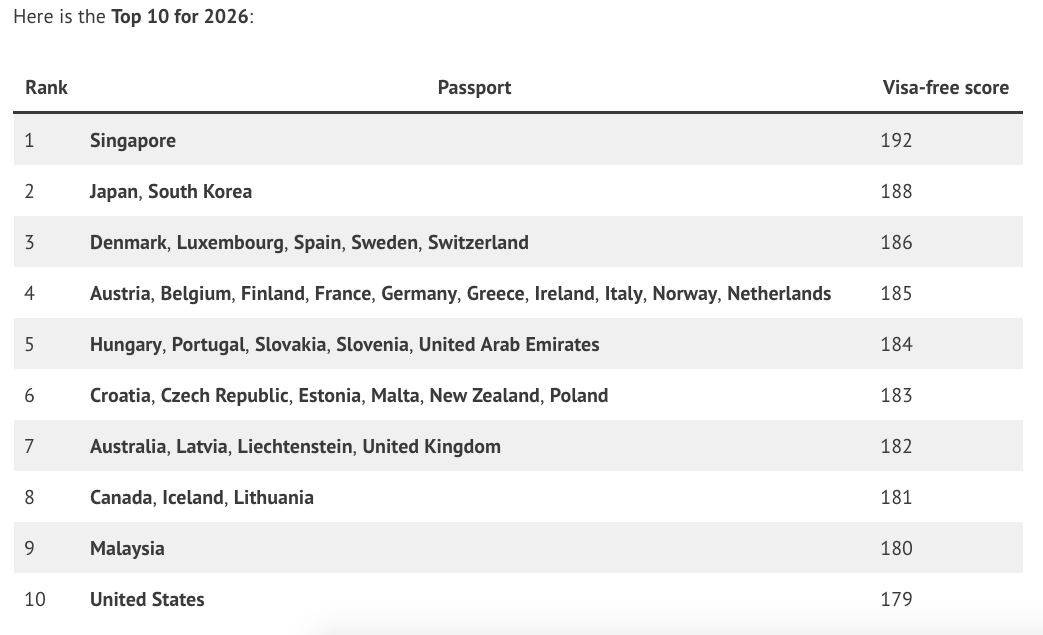
Henley & Partners’ 2026 Henley Passport Index confirms Singapore’s dominance at the top of the ranking of the world’s ‘most powerful’ passports, offering visa-free access to 192 destinations.
Australians had access to 182 countries and territories, ranking the Australian passport seventh in the world.
Additional stories www.streetwisemedia.com.au.