DEPUCH ROCK ART ‘TOO DANGEROUS’ TO PUBLISH
 By Carmelo Amalfi
EXCLUSIVE: A 347-page rock art book considered ‘too dangerous’ to publish is a stunning visual history of Aboriginal culture imprinted on a mystical island off WA’s Pilbara coast.
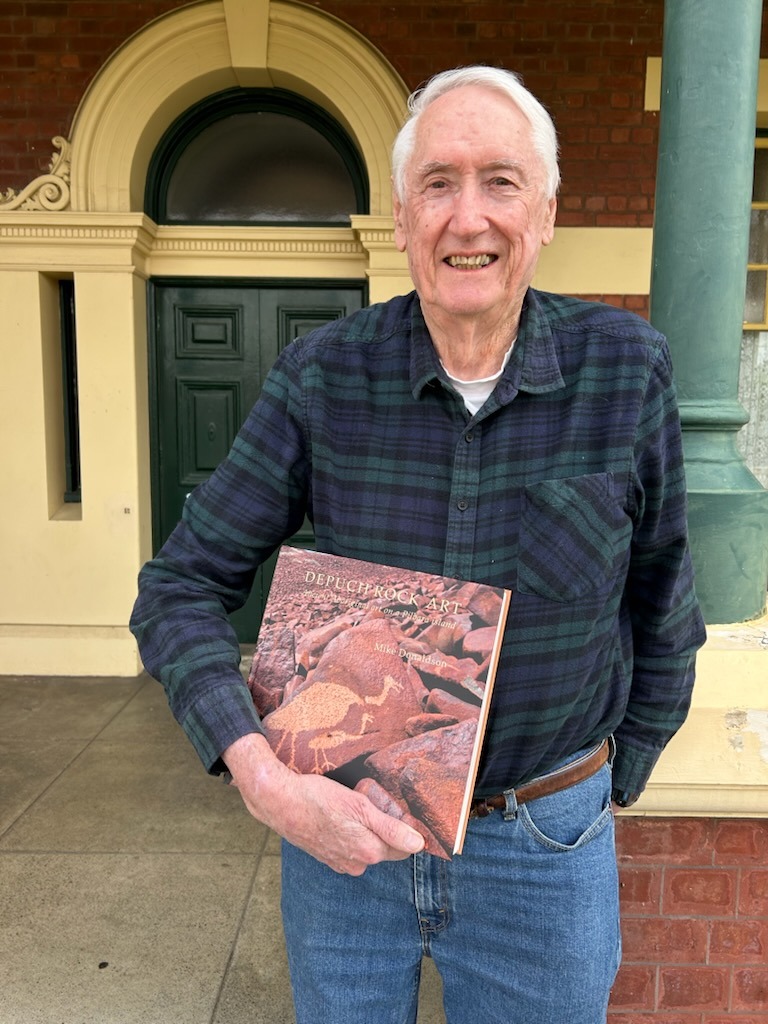
Only the few people who have an unpublished copy will share the profound connections to country and beauty of petroglyphs captured at Depuch Island by OAM author Mike Donaldson.
The ancient artworks depict marine wildlife, retribution scenes, initiation ceremonies, even the handprints of their creators (featured above).
None of the images reproduced here are sourced from Dr Donaldson’s book.
Scientists in the early 1960s described Depuch as a, “repository of Australian prehistory no less significant than such world-renowned prehistoric art galleries as the caves of Lascaux in the Dordogne and Altamira in northern Spain”. Lascaux is famous for Palaeolithic wall paintings found in World Heritage caves in the Dordogne region of southwestern France. They are estimated to be up to 20,000 years old.
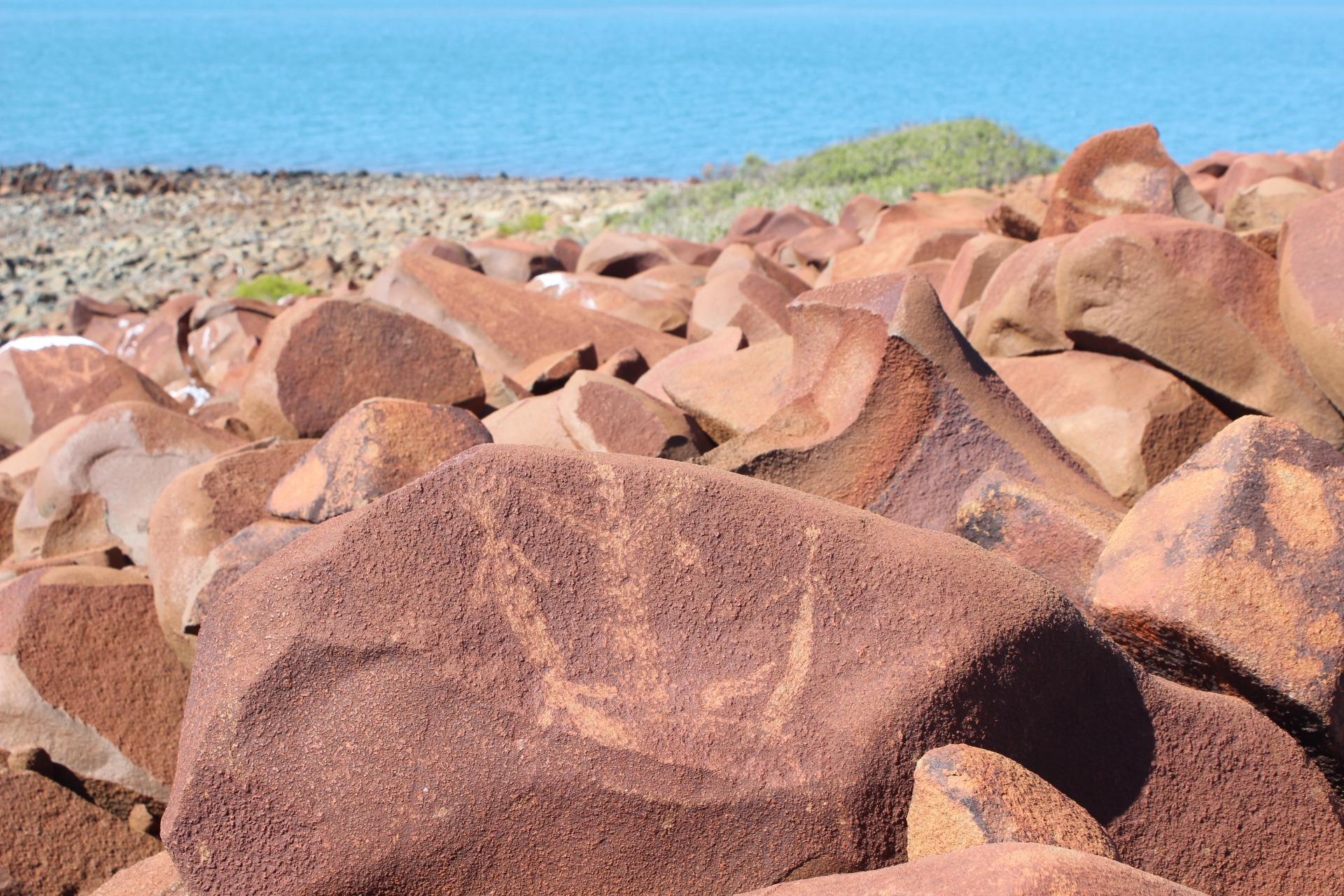 Depuch hosts several thousand petroglyphs up to 8000 to 10,000 years old when sea levels rose to create all of Australia’s islands including Depuch and Dampier Archipelago. They are unique in Australia and comparable to the recently World Heritage listed Murujuga site 90km away.
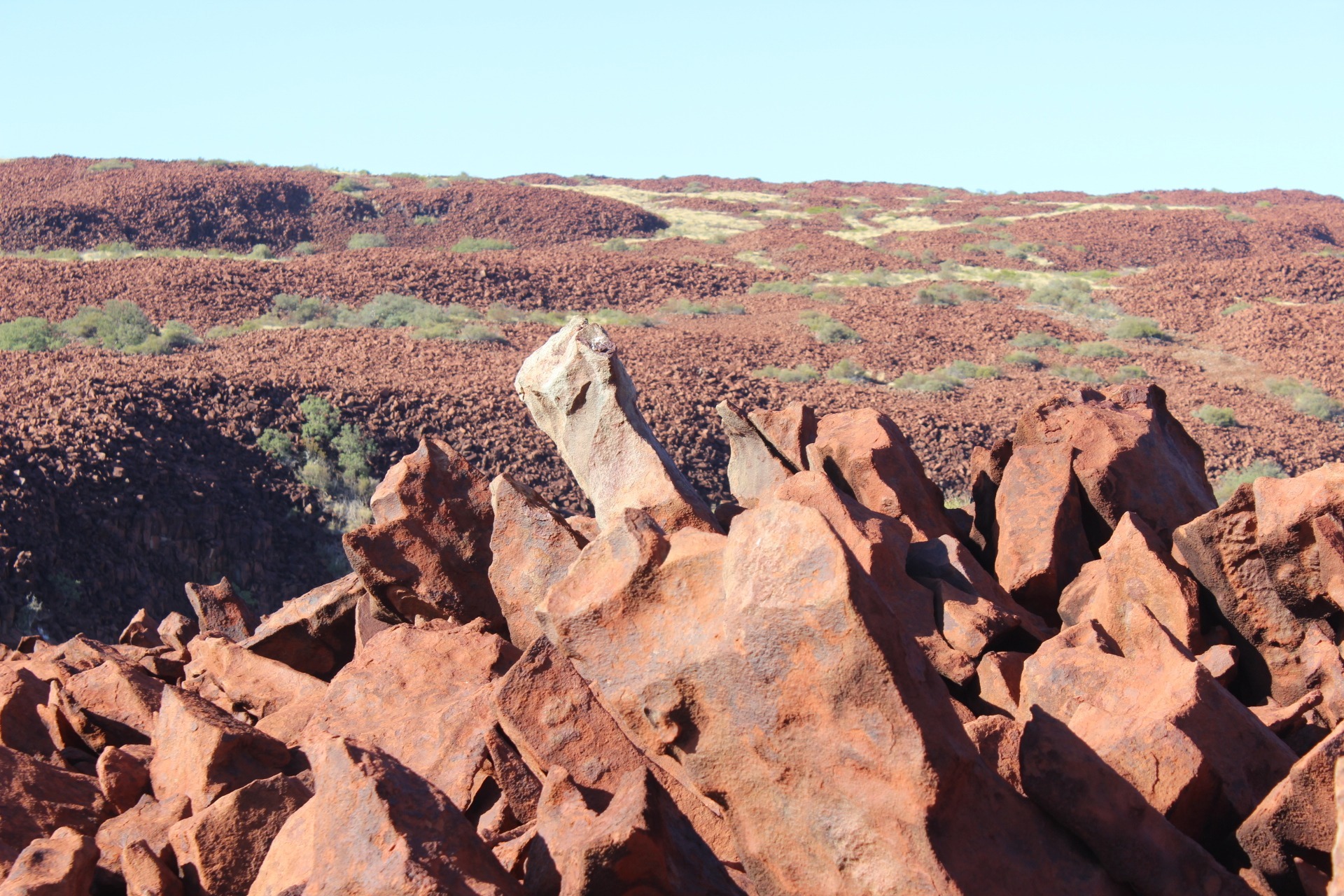 Nearly 13km in circumference, Depuch is an oblong-shaped volcanic island 3km off the Balla Balla coast near Whim Creek.
The 1500ha rock art ‘library’ was declared an Aboriginal reserve after the WA Government in the 1960s abandoned plans to build the first North-West industrial port here, instead shifting it to Burrup Peninsula, Murujuga.
Dr Donaldson, 81, shelved the unpublished ‘Depuch Rock Art’ after a Ngarluma Aboriginal Corporation heritage officer told him the publication would be culturally insensitive.
‘Too dangerous’.

In 2010, Dr Donaldson published ‘Burrup Rock Art’, a 516-page book that showcases Murujuga’s petroglyphs at Dampier. It was not censored or considered culturally harmful.
Awarded an Order of Australia Medal for ‘Service to the Indigenous Community of WA’, which recognised his important documentation of Burrup and Kimberley rock art, Dr Donaldson said he received permission from the Department of Aboriginal Affairs and WA Museum to visit and photograph Depuch’s world-famous art.
“I visited the island three times with approval to camp and photograph the art, but still requiring Aboriginal approval to publish the images,”
the retired geologist told StreetWise at Dome, Maylands, where a couple of customers asked about the images in the bulky publication.
“I tried several times to visit Ngarluma Aboriginal Corporation but they wouldn’t meet. They have never seen the book. I was told it was the most secret and dangerous place in the world. I haven’t pursued it, it’s just too hard. Some of the groups are keen, but there’s always someone who isn’t.”
 Dr Donaldson said it is frustrating having his book banned as the island is an important site not only for Aboriginal, but European cultural history.
Described as Uluru’s ‘dark sister’, the island was named after Louis Depuch, mineralogist on French commander Nicolas Baudin’s 1800-1803 expedition. It became a stopover for ships needing food and water supplies, with inscriptions left by the crew of HMS Beagle in 1840 (Charles Darwin was not on this Beagle voyage, having visited Australia in 1836). Importantly, the Royal Geographical Society for the first time in 1842 published Beagle Captain John Wickham’s notes and reproductions of the unusual rock art. Thirteen figures were published out of 94 recorded on Wickham’s voyage.
 After Beagle’s visit, the island remained shrouded in mystery for nearly a century until anthropologists from Germany’s Frobenius Institute, Drs Helmut Petri, Andreas Lommel and Douglas Fox, visited Depuch and recorded thousands of petroglyphs in 1938 and 1939.
Images of Depuch rock art also can be found online published by fishers, boat lovers and visitors camping on the ‘forbidden’ island. Many are unaware that permits are required.
StreetWise contacted NAC for comment in the hope of allowing Dr Donaldson to publish his valuable work.
Murujuga Aboriginal Corporation has said it wanted Depuch included on the World Heritage nomination but could not get ‘traction’ with NAC.
MAC CEO Peter Jeffries told StreetWise in 2022 he was hopeful Depuch Island could be included at a later date: “There’s an opportunity to consider other places. They could be added at some point in time, but it’s a discussion we need to have with NAC. Depuch is a special place.”
 Ngarluma, Garijarra and Yindjibarndi believe the 5km by 3km island was left over from the creation of Uluru by spirit men, Maralga, who carried it to the Pilbara coast and threw it into the ocean. On Google Earth (opposite), Depuch looks remarkably similar to Uluru. Sea shells separated at birth.
At beach level the sister site’s beauty and cultural significance sinks in for visitors to this rock art-rich ‘hill’ Ngarluma, Gariyarra and Yindjibarndi people regard as a ‘dangerous’ place banned to women and uninitiated men.
An avid bushwalker, Dr Donaldson visited the island in 2006, 2010 and 2014. Management of Depuch and Balla Balla was transferred to traditional owners in 2015.
“Depuch was used for ceremonies by different neighbouring groups,” he said. “Initiation ceremonies were held there, but no one lived on the island.”
Some of the documented rock art at Depuch is unique and cannot be found at a Murujuga which consists of more than one million petroglyphs. Depuch contains thousands of petroglyphs including those depicting ‘retribution’ scenes unique to the island. They show groups of 20 to 40 people gathered in a circle around a figure they are punishing with spears. The author has identified at least 10 sites with retribution rock art.
World heritage worthy
 Dr Donaldson’s unpublished book is important in the context of the World Heritage listing of Burrup ‘Murujuga’ rock art. Depuch and nearby art sites such as Peawah Hill are not included on the international list.
A Department of Agriculture, Water and the Environment spokesman in Canberra told StreetWise in 2022: “A single geo-reference point, which is located in the National Heritage place, was used in the tentative list submission. The National Heritage place is the Dampier Archipelago including Burrup Peninsula. Depuch Island isn’t in the National Heritage place.”
The tentative list submissions for Murujuga’s proposed World Heritage listing included nearly 50 studies supporting the nomination without a single reference to Depuch or any other sacred rock art sites within a stone’s throw of Murujuga.
There is no mention in the nomination of the WA Museum visits to and early reports of Depuch’s rock art, including the 88-page ‘Special Publication No.2 – Depuch Island’, published in 1964 with detailed descriptions and images which ultimately helped curb plans to build WA’s new industrial port at Depuch.
After his visit in 1958, Dr Frederick McCarthy published, ‘The Rock Engravings of Depuch island, North-west Australia’, with detailed descriptions of the rock art.
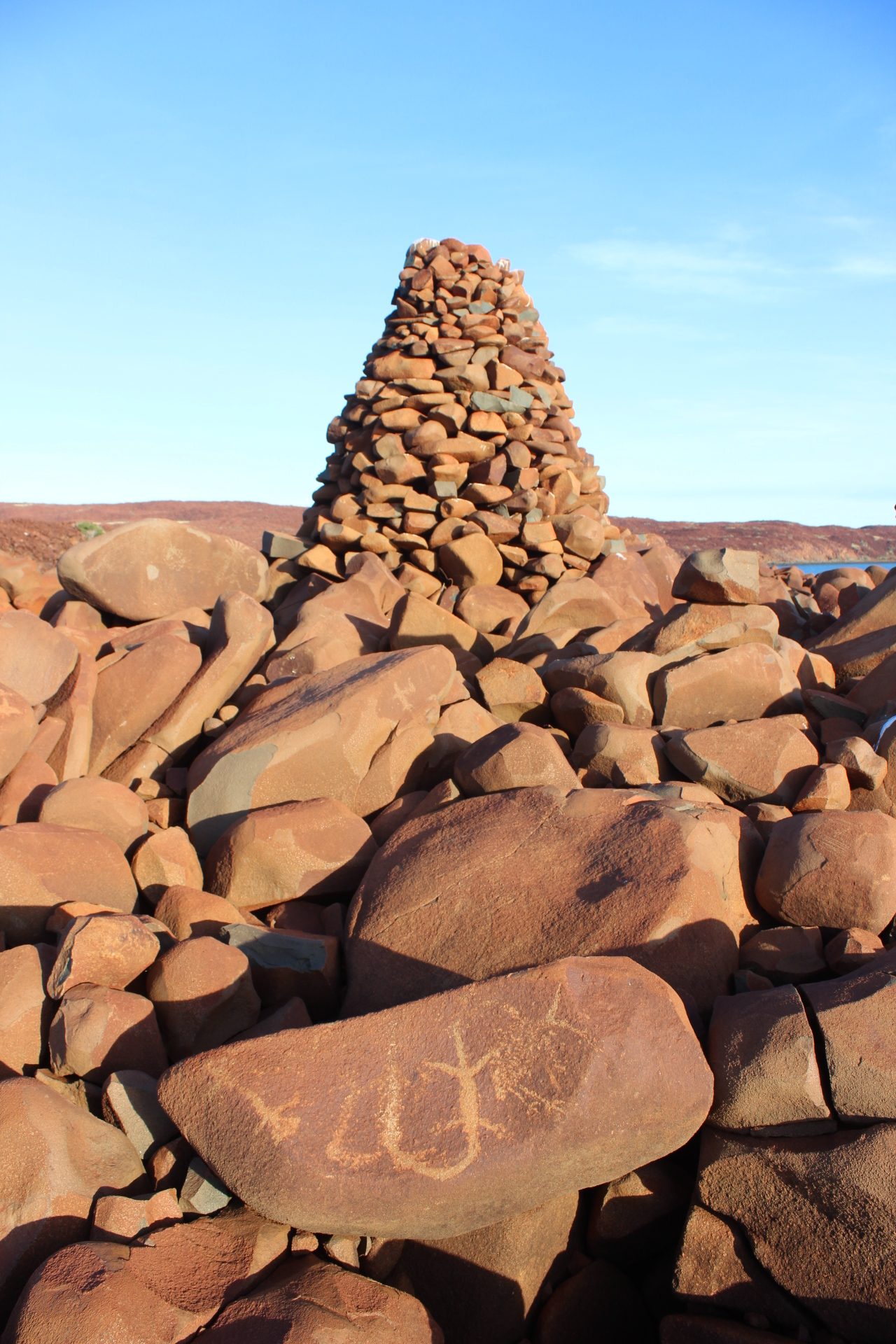 Dr McCarthy said, “the great variety of human and spirit figures and the many excellent figures of animals, warrant its being denoted as one of the most artistically interesting sites of naturalistic engravings in Australia”. He said the depiction of the figures on Depuch compared closely with those found in the Kimberley and western Arnhem Land.
Beagle’s crew inscribed details of their visit at Anchor Hill and Watering Valley and returned to Europe with images of Aboriginal figures wearing elaborate headdress, carrying weapons, shields and boomerangs, taking part in ceremonial dances and retribution scenes and wildlife, snakes, frogs, birds, turtles, crabs, whales and sharks.
More unusual works include a strange praying mantis-like creature, a group of alien-like stickmen with tiny bodies and big heads and pairs of ‘kurdaitja’ shoes or sandals showing the upper webbed covering of the feet and lacing.
But of the thousands of images carved into ‘Ile Depuch’, it is the hands of its Indigenous creators that stand out; the ancient artist’s signature preserved in stone for thousands of years.
Former environment minister Stephen Dawson told StreetWise in 2022, “as the island is more than 90km from Murujuga, it may be difficult to justify in the nomination how it could be effectively managed as part of the World Heritage area”.
Mr Dawson said Depuch was vested as a Class A Crown reserve for the purpose of preservation of rock art: “I understand Depuch Island is of great cultural significance to the traditional owners, the Ngarluma People, and contains one of the highest concentrations of rock art in Australia.”
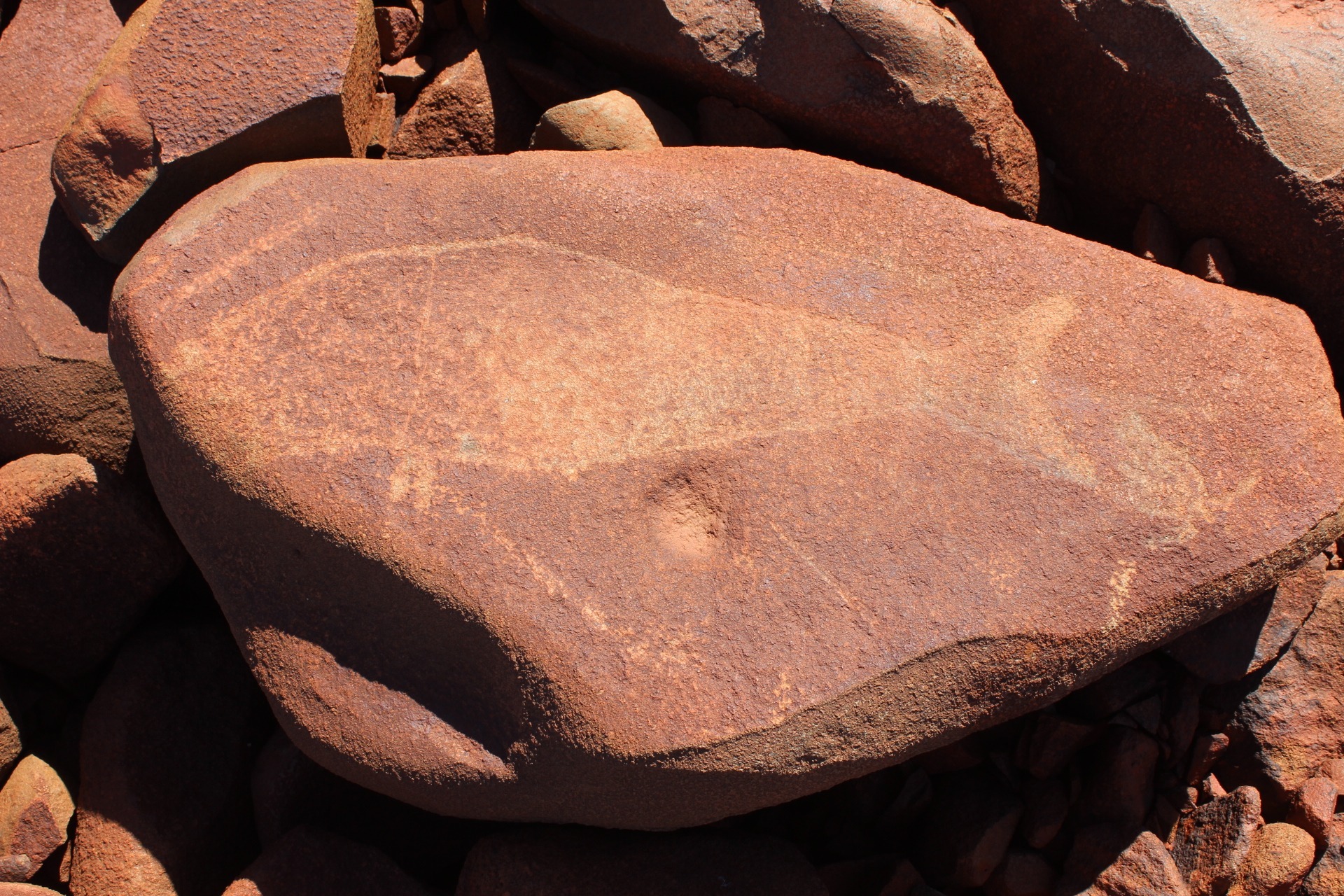 Though Dr McCarthy refers to Depuch as ‘Womalantha’, WA Museum scientists including zoologist Ronald Murray Berndt noted after a visit in 1962 and interviews with local Aboriginal elders that Depuch also was referred to as ‘Womala’.
The Karieri people once lived around the coastal and neighbouring inland area around and east of Port Hedland, including the Yule and Turner rivers.
Depuch was rejected as an industrial port, “on the grounds of its exceptional Aboriginal heritage”. Education and native welfare minister Edgar Lewis stated on December 23, 1964: “We have an accurate statement of the island in its context as one of the most remarkable native art sites in existence and of which we, as Western Australians, can be justly proud.”
More than half a century later, it’s back to the future.
NZ company Todd Corporation proposed a $6 billion revival of the Balla Balla port plan after the McGowan Government ratified in 2017 a State Agreement to build a 62km rail line from inland mines to the coast opposite Depuch. Todd Corporation also signed a memorandum of understanding with China State Construction Engineering Corporation for the construction of the rail and port and says it has put in place all native title and heritage agreements with, “relevant traditional owner groups”.
This includes Ngarluma Aboriginal Corporation (for the Ngarluma people); Yindjibarndi Aboriginal Corporation (Yindjibarndi people) and Wintawari Aboriginal Corporation (Eastern Guruma people).
 The MOU was signed in 2017 at a ceremony in Canberra attended by former prime minister Malcolm Turnbull and Chinese Premier Li Keqiang.
Would including Depuch inside the Murujuga boundary interfere with revived plans to industrialise the Balla Balla coast? And what agreements were made with traditional custodians under the State Agreement?
The industrialisation of Balla Balla could cut a significant cultural link to Depuch. Such a strategic mining and construction project would have a major impact on the island no less severe than the threat posed in the early 1960s.
According to a 2006 National Trust of Australia report, Murujuga is part of a living tradition: “Aboriginal people believe that the petroglyphs are the work of the marga, ancestral creator beings, in the Dreaming. They are a permanent reminder of the Law and retain their spiritual power. Looking after the petroglyphs is an inherited and ongoing responsibility. Pilbara people have songs and mythology for many of the images depicted in petroglyphs on the Dampier Archipelago, as well as on the mainland and Depuch Island.”
As Ride stated after his visit to Womalantha: “Let us hope that the future will deal with Depuch as kindly as the past has, and that other parties like our own will be able to continue the task of interpreting the history and beliefs of our forerunners on the continent.”
Additional stories and rock art images at www.streetwisemedia.com.au.