
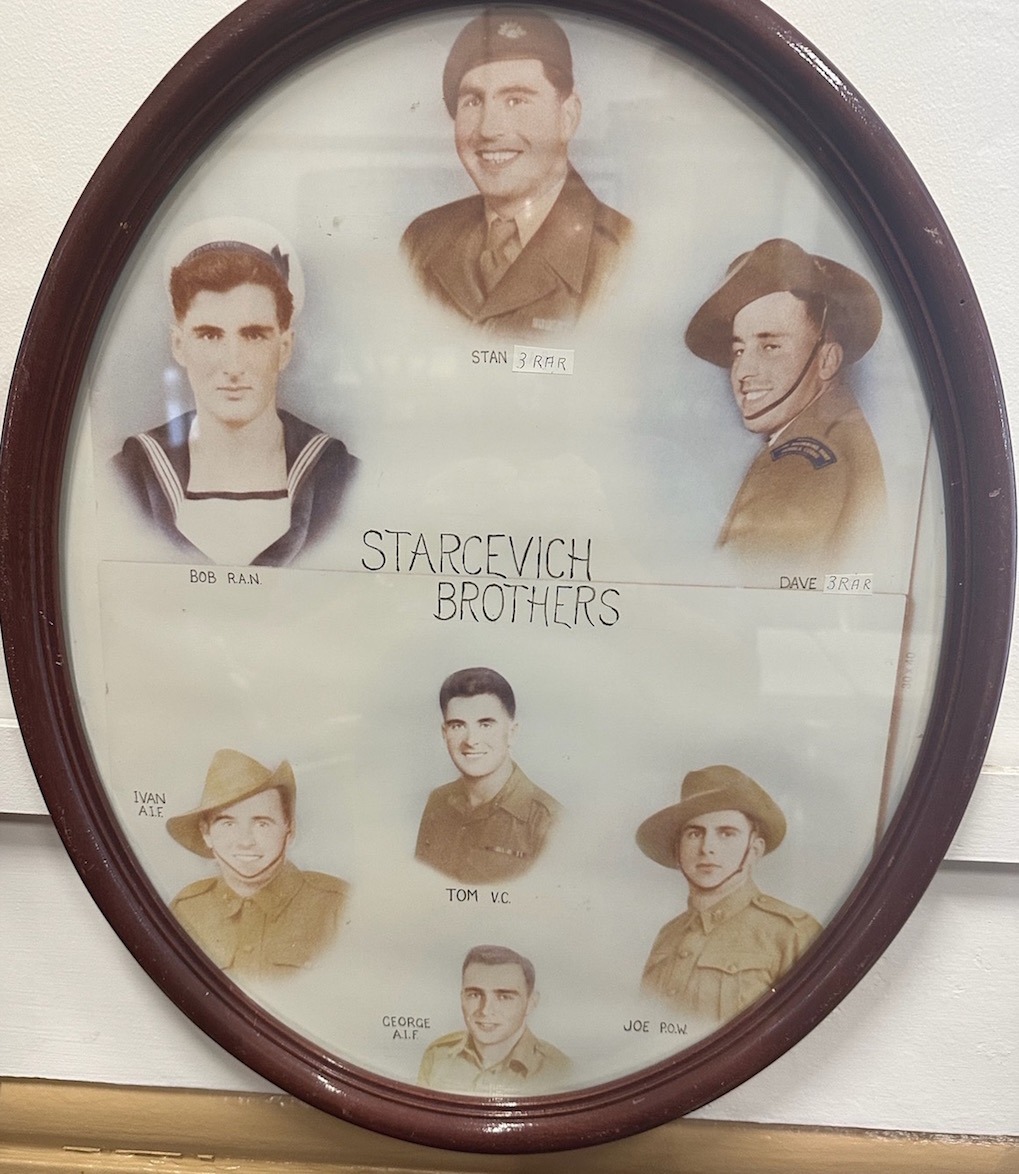
STARCEVICH BROTHERS HONOUR ANZAC TRADITION
by Carmelo Amalfi
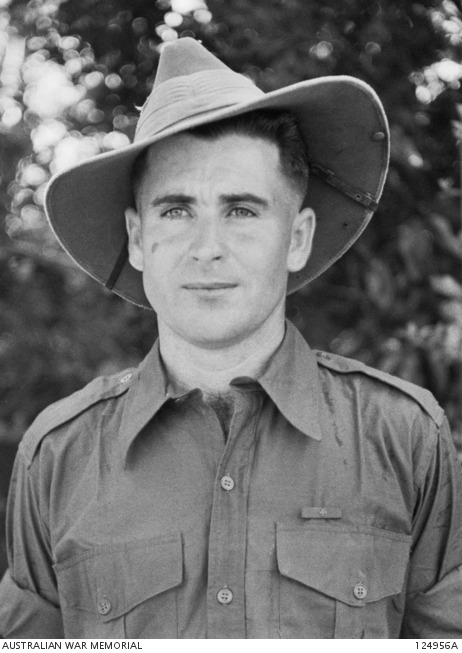 CROATIAN VC war hero Leslie Thomislav ‘Tom’ Starcevich was one of eight brothers from WA who served in WW2 and Korea. Wounded, shot, sent to prison labour camps, they survived to tell extraordinary tales of bravery and sacrifice as they quietly retreated to mallee country to raise sheep and grow wheat near Esperance.
Even their father enlisted.
On Anzac Day, the youngest and only surviving brother and Korean War veteran Stan, 95, will join Australians to honour all personnel who have served in wars, conflicts and peacekeeping missions.
On the 111th anniversary of the Gallipoli landings, StreetWise revisits the remarkable story of the Starcevich family including Tom whose Victoria Cross is on display at the Army Museum of WA in Fremantle.
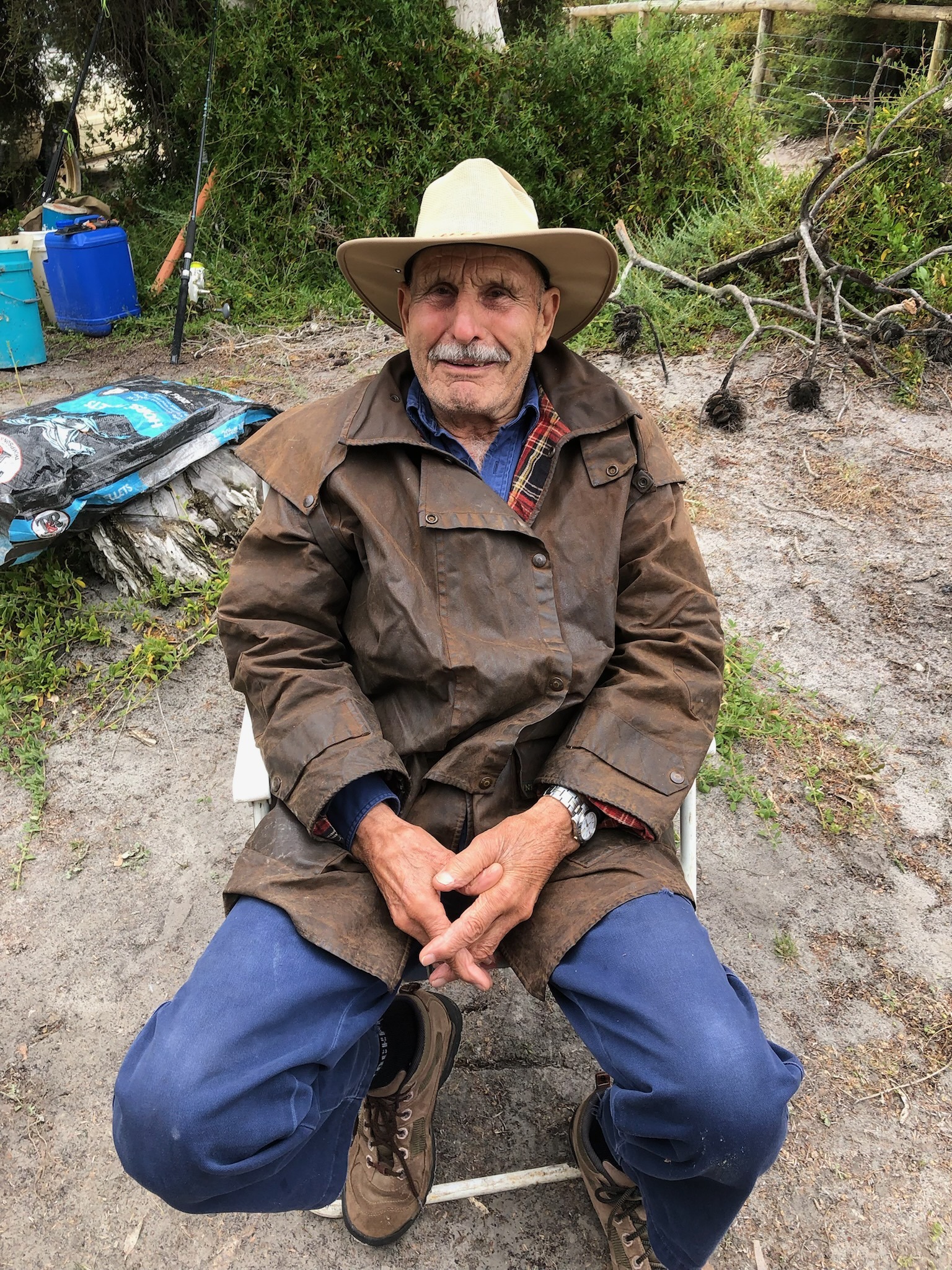 “We were just lucky, all of us,” Stan said from Esperance where he is helping with preparations for the Anzac Day dawn service and parade expected to attract up to 2000 people on Saturday.
“War is hell as the Yanks used to say. I joined when I was 19.”
The former paratrooper with 76 jumps under his belt left the forces in 1956 and began a panel beating business for 12 years before buying a rundown dairy station he converted into a sugar cane farm in Austinville, Queensland. He also worked on drilling rigs looking for water.
Stan returned to Esperance in 1994.
Asked why he didn’t move back to Grass Patch, he said: “Have you been to Grass Patch? Then you haven’t lived.”
 Stan said he has fond memories of his older brothers, “they were sort of nurturing us younger ones”.
Asked how many children he had, the father of three replied he married in 1954: “Mum and dad had 10 kids so I thought I better get in soon. Grandkids? Wall to wall.”
Stan says he still catches up with his younger sister Pat, 92, “and shout at each other because we are deaf as beetles”
. Older sister Mabel passed away in 2013, aged 96.
VC honour
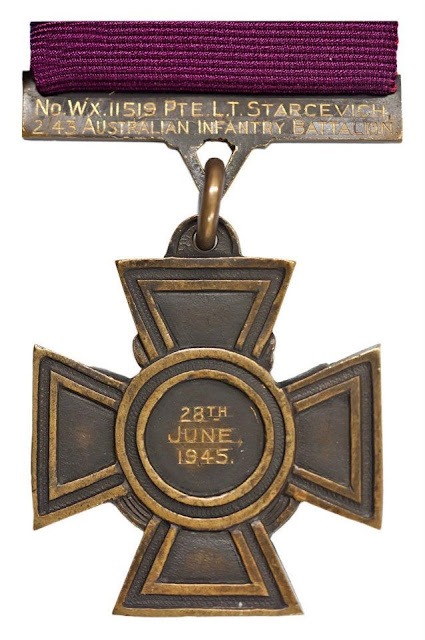 STAN’S famous older brother Tom was born in Subiaco and worked in a gold mine at Norseman before he enlisted at Claremont in 2/43rd Australian Infantry Battalion on April 9, 1941. He served in Palestine and Libya and became one of the ‘Rats of Tobruk’.
In September 1941, the 22-year-old private from Grass Patch sailed from Fremantle to the Middle East where his acts of bravery quickly caught the attention of his mates and superiors.
On July 17, 1942, Tom was shot in the thigh by a machine gun at Ruin Ridge in the first battle of El Alamein in Egypt, having later in that campaign, “carried a wounded mate three miles to safety”.
While recovering in hospital, Tom willingly gave his blood to keep a German soldier alive as they had the same blood type.
Tom returned to Australia in February 1943 and six months later rejoined his unit and served in the Huon Peninsula campaign against the Japanese at Lae and Finschhafen in New Guinea.
From May to December 1945, the 2/43rd Battalion took part in the Australian assault on Labuan and North Borneo. In Papua New Guinea, Tom was one of 30 Australians who for nine hours repulsed 150 Japanese, killing 26 and wounding 50, to liberate the village of Gusika in November 1943.
 But Tom’s finest hour unfolded on June 28, 1945, when the battalion formed in South Australia in 1940 attacked the town of Beaufort in North Borneo. Tom’s company encountered the enemy on a narrow track, Japanese forces dug into the thick-wooded terrain. As the first post opened fire on his lead section, Tom pushed past the forward scouts firing his Bren gun from the hip, taking out the post.
He then silenced a second machine gun emplacement when, “he coolly changed his magazine, advanced upon this post and, standing in full view of the gunners, destroyed it. Encountering a third post, he and a fellow soldier moved forward and, “kept the post quiet with a hail of fire”. His family said after Tom took out the enemy emplacements, “his shirt was shredded”.
But Tom’s finest hour unfolded on June 28, 1945, when the battalion formed in South Australia in 1940 attacked the town of Beaufort in North Borneo. Tom’s company encountered the enemy on a narrow track, Japanese forces dug into the thick-wooded terrain. As the first post opened fire on his lead section, Tom pushed past the forward scouts firing his Bren gun from the hip, taking out the post.
He then silenced a second machine gun emplacement when, “he coolly changed his magazine, advanced upon this post and, standing in full view of the gunners, destroyed it. Encountering a third post, he and a fellow soldier moved forward and, “kept the post quiet with a hail of fire”. His family said after Tom took out the enemy emplacements, “his shirt was shredded”.
It was for this Rambo-style display of guts under fire that Tom received Australia’s highest military honour. The people of Beaufort erected a memorial to Tom and named the jungle track ‘Victoria Cross Road’.
The VC citation was published in the London Gazette on November 6, 1945: “For most conspicuous gallantry and extreme devotion to duty at Beaufort, North Borneo, 28th June, 1945.”
Tom would say later: “It was mainly survival. If you back off, you are a sitting duck. It was mainly a matter of self-preservation.”
Mallee people
 TOM returned to Australia in January 1946 and was discharged the following month. The following year, he married Kathleen Betty Warr (nee Hardy, of Money Street, Perth) and lived in Subiaco until 1951 when Tom and older brother Joe were granted 1700ha of farmland near Carnamah under the soldier settlement scheme.
The Sydney Morning Herald on November 11, 1964, reported that Tom spent the first four years after the war as a car salesman in Perth before he received the land grant, “which he now works with his elder brother, Joe. He wanted to enlist during the Korean War but his wife talked him out of it”.
Tom’s family had moved to Grass Patch 79km north of Esperance in the early 1920s. Grass Patch was gazetted in 1923, named after a farm settled around 1896. During the war, the town’s population was reduced to about 44 (11 families).
 Former army driver George Starcevich who also served in North Borneo passed away in 2008. He said in 2004 that 20 of the 75 men from a population of 330 in Esperance did not return after WW1. There were 20 sets of brothers in that contingent, he said. Today, more than 130 people live in Grass Patch.
Tom and Kathleen had three children. They divorced in 1969 and in 1981 Tom moved back to Grass Patch were he bought a small farm.
The VC hero was buried in Esperance with full military honours on November 17, 1989.
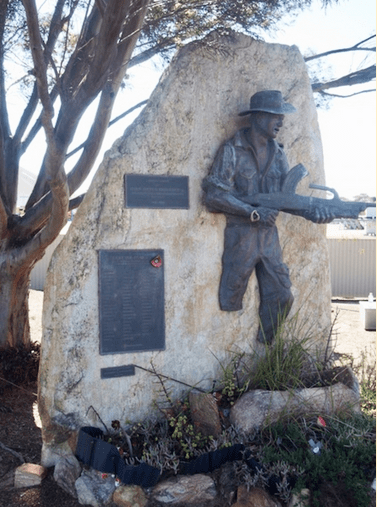
A bronze statue was erected in Grass Patch in Tom’s honour in 1995 and street named after him.
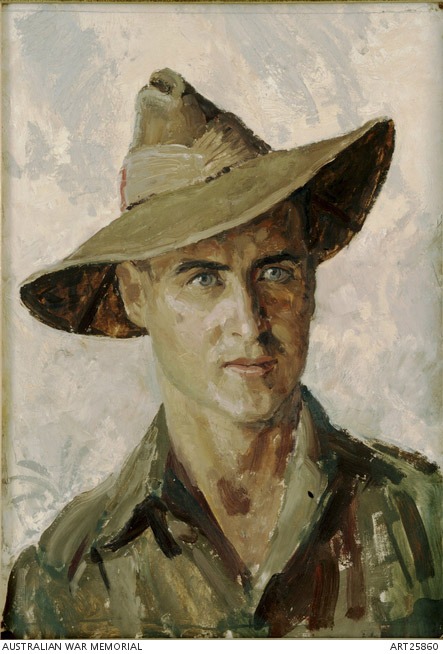
His portrait painted in 1945 by war artist George Browning after receiving the VC hangs in the Australian War Memorial in Canberra.
Tom received the Ribbon of the Victoria Cross at Papar in North Borneo on November 12, 1945, but was presented with the actual VC at a ceremony in Government House in Perth on May 27, 1947.
Croatian pride of place
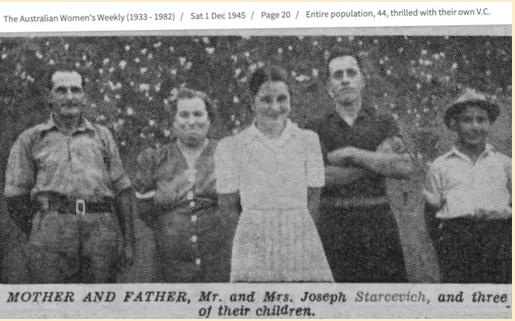 TOM’S father Josip arrived in Fremantle in 1908 on Ormonde, aged 16, to start work in WA’s goldfields cutting timber. On November 24, 1915, he married English-born Gertrude May, nee Waters, at Mount Margaret, 31km southwest of Laverton.
Not to be outdone by his famous sons, Josip enlisted in the Australian Army Volunteer Defence Corps on April 5, 1942, posted to the 8th Battalion (WA), aged 50. He died in 1961, aged 69.
His eldest son Joseph (Tom’s older brother) was born in 1915 at Mount Margaret, Laverton, and enlisted in the 2/4th Australian Machine Gun Battalion on October 23, 1940.
He was a prisoner of war of the Japanese after the fall of Singapore on February 15, 1942.
He survived Changi Prison, the Burma-Thailand railroad and Nagasaki, Japan.
On January 5, 1945, Joe was injured in a rock fall working in a coal mine at Omuta, about 125km northeast of Nagasaki. Joe avoided the atomic bombing in August 1945 partly because he was hospitalised after breaking his hip in a tunnel collapse. A doctor set Joe’s leg without anaesthesia or antibiotics and used the only metal pin available; a rusty spoke from a bicycle wheel. He was taken out of Nagasaki about 10 days before the bomb was dropped. His leg was amputated more than 50 years later.
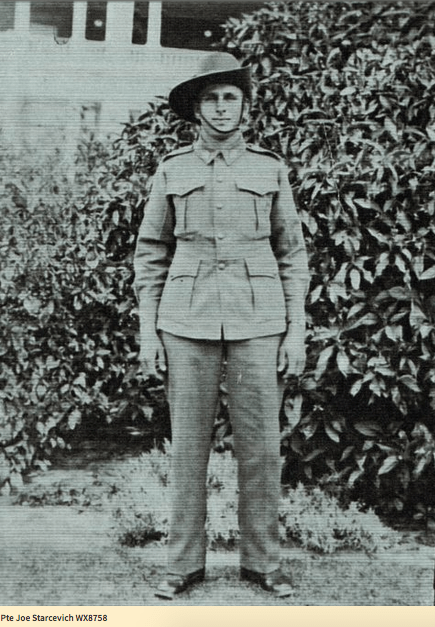 After the war, he worked as a farmhand for Tom in Carnamah and later the Wallace family in Coorow. He refused to accept a pension because he felt he could still work as a farmer despite his pain and difficulties. The father of four passed away in 2008.
His nephew and RSL deputy president in Esperance George Starcevich, 77, told StreetWise today that Tom nearly missed the war: “Tom was shot in the head by my father George when my father was nine years old, accidentally.” Tom was 14.
The West Australian and Herald in Melbourne reported that two boys obtained a pea rifle when; “the elder one cleaned the rifle, and the younger one, unknown to the elder lad, loaded it”. George reportedly said, “if this was loaded, you’d be dead”. They started playing with the gun when George pointed the rifle at Tom and shot him in the face, “the bullet passing through the nose”. Amazingly, the boys got in a cart and drove to a local farmer who motored them to their father. At Esperance hospital, doctors operated on Tom and, “extracted the bullet from the back of the head, and the patient is now progressing favourably”.
George said he joined the RAN in 1965 and completed eight tours to Vietnam on HMAS Sydney. He said Tom was a very quiet man: “He wasn’t a big fella. The boys were all pretty short. He was only 71 when he died.”
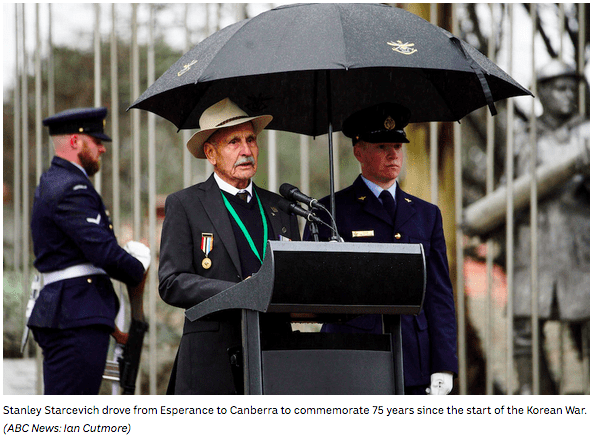 He said uncle Stan last year drove himself more than 3000km from Esperance to Canberra to commemorate 75 years since the start of the Korean War.
George said on the way Stan picked up a group of Aboriginal men he drove 600km in the dark to Alice Springs: “We worry, but he’s a stubborn ol’ bugger.”
Lest we forget.


